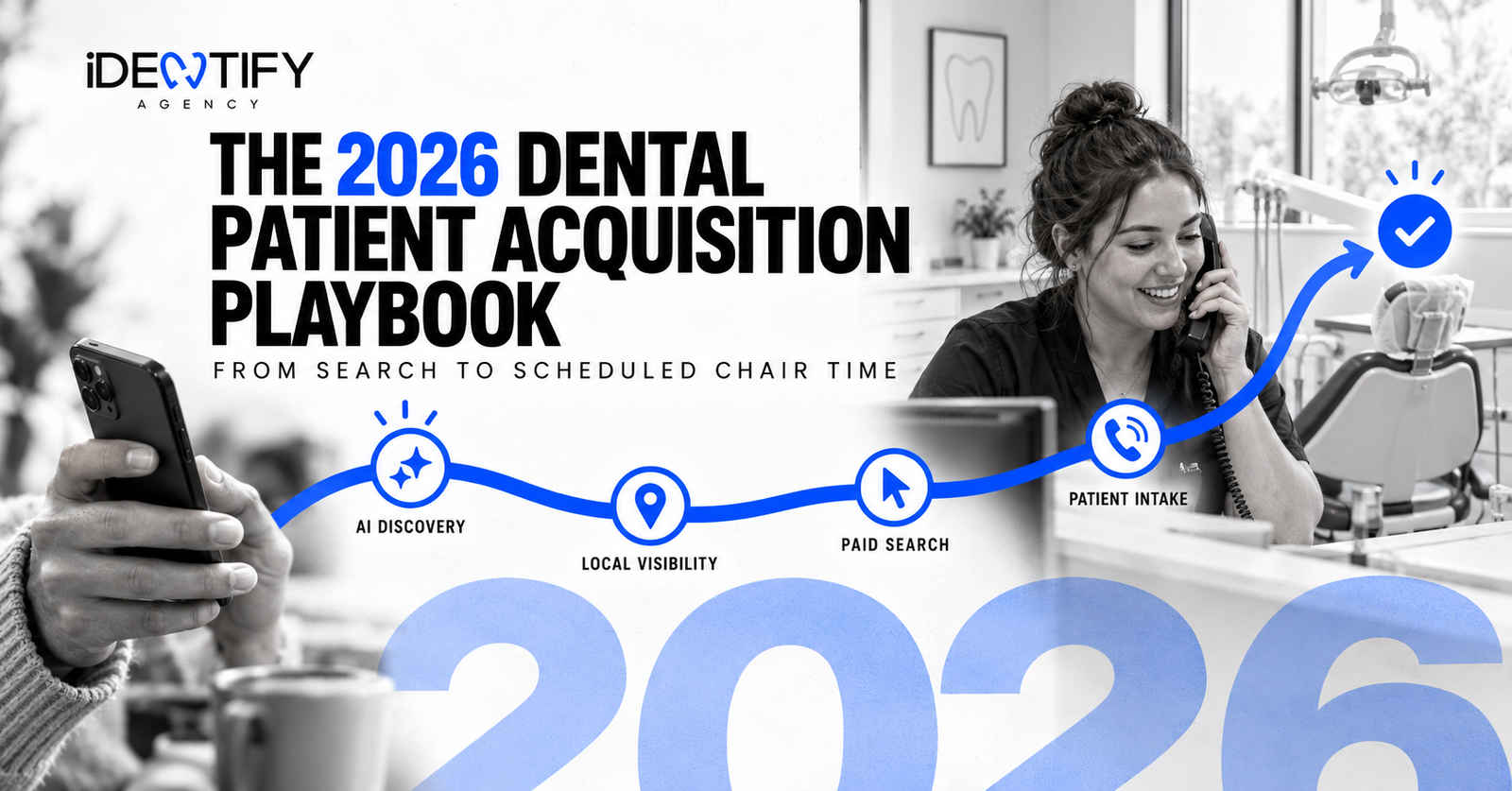
Search behavior is undergoing a fundamental transformation as prospective patients abandon 2-word Google queries, standard links, and top banner ad placements. Contemporary healthcare consumers ask nuanced questions demanding procedure-specific comparisons, recovery timelines, provider qualifications, and financing options prior to scheduling a discovery call.
This dental SEO guide explains how practices can turn that changing search behavior into qualified discovery, stronger patient trust, and scheduled chair time.
Practices utilizing barebones service pages, stock image galleries, and fractured pay-per-click budgets are discovering that their competitors who thoughtfully optimize clinical content, local discovery, and conversion infrastructure dominate the modern patient acquisition landscape.
In practical terms, dental SEO in 2026 is no longer limited to ranking a website. It must connect visibility with what happens after a patient discovers the practice.
Answer Engine Optimization + Technical Authority + Segmented Paid Search + Operational Conversion Infrastructure
1. The Rise of Answer Engine Optimization + Generative Search
Forty-plus percent of healthcare searches now yield direct answers from AI engines.
When a prospective patient asks an AI voice assistant, “Find me a full-arch implant dentist with flexible payment plans in my area,” the underlying algorithms study practice directories, schema markup, and doctor credentials to name a specific recommended provider.
Traditional search engine optimization seeks to rank a company’s website within the first few organic search result positions. Answer Engine Optimization, sometimes called Generative Engine Optimization, ensures search artificial intelligence cites the practice directly within the search results.
Semantic Content Architecture: Organize your team’s informative content as frequently asked questions addressing patient concerns about complex treatments.
Medical Schema Markup: Add schema coding for healthcare businesses, doctors, and procedures to help search engines identify and recommend your practice.
Entity Verification: Ensure the accuracy of your company’s information across medical data platforms.
2. Local SEO + Google Business Directory Authority
High-quality local map packs continue to drive appointment-setting volume for solo practitioners and Dental Service Organizations. Commanding local search dominance requires attention to standard local SEO factors:
Category & Schema: Select the primary category—dentist, oral surgeon, or orthodontist—and supporting subspecialties within your service portfolio to define the page’s schema coding.
Review Quantity + Quality: Implement systems for accumulating fresh reviews mentioning relevant treatment categories such as dental implants, veneers, and orthodontics.
Geo-Grid Authority: Maintain consistent NAP—name, address, and phone number—across directory listings to maximize the local map pack’s coverage area.
3. High-Intent Paid Search: Full-Arch, Implants, Emergency Care
Irresponsible healthcare advertising measures engagement metrics – clicks, impressions, and contact form submissions—as success metrics while ignoring ultimate profitability through booked and completed procedures. Low-budget patient acquisition channels hemorrhage resources by attracting cheap leads unable or unwilling to maintain production schedules.
Smart paid search campaigns segment first-time inquiry sources by projected lifetime value:
Target High-Value Procedures: Utilize high-intent long-tail keywords such as full-arch implants and sedation dentistry to attract qualified leads researching transformative treatments.
Leverage Visual Landing Pages: Create informative, visually appealing landing pages for cosmetic dentistry, veneers, and clear aligners.
Use Hyper-Local Bidding: Employ local map pack targeting to secure “dentist near me” and same-day emergency care appointments.
4. Operational Conversion Infrastructure: Connecting Inquiries to Confirmed Appointments
High-intent search traffic, compelling procedure-specific landing pages, and strategic local map pack bids all collapse when prospective patients reach an unprepared front desk, unanswered voicemail, or convoluted online scheduling system.
High-Intent Search or AI Discovery → Procedure-Specific Landing Page → Optimized Front Desk → Confirmed Production Within Practice Management Software
The most successful modern dental organizations operate with an optimized conversion infrastructure, ensuring every inbound inquiry connects directly to confirmed chair time.
Cutting-edge practices implement practice-layer auditing, front-desk call script refinement, and HIPAA-compliant tracking software to associate every production with a digital touchpoint.
iDENTIFY Agency approaches this differently. As a Practice-First Dental Marketing Agency, we connect discoverability, patient trust, paid acquisition, and front-desk follow-up instead of treating them as separate projects.
A dental agency should not stop at generating traffic. It should help the practice understand which searches become calls, which calls become appointments, and which appointments become completed treatment.
Book Your Free Audit Now
Frequently Asked Questions
Q: How does dental SEO work in 2026?
A: Modern dental SEO combines technical website health, treatment-specific content, local authority, accurate practice information, AI-readable content, and a clear conversion path. The goal is not simply to attract website traffic. It is to help the right patients discover, trust, and contact the practice.
Q: How long before SEO initiatives begin impacting patient acquisition in 2026?
A: Technical SEO corrections and Google Business optimizations often yield measurable results within 60–90 days, while competitive procedure-specific rankings take 4–6 months of commitment.
Q: Why are social media posts failing to accelerate patient acquisition growth?
A: Prospective patients consume social media to research doctors, uncover authentic patient testimonials, and investigate office culture. Most will not book appointments based on generic dental marketing content. Seventy-five percent of millennials and Gen Z-ers analyze a practice’s social media profiles before requesting an introduction call.
Q: How can a dental practice begin preparing for AI-driven search platforms?
A: Begin publishing complete procedure-specific FAQ pages, correcting schema markup and technical SEO issues, and verifying doctor credentials across medical directories.